Gyeongju was the capital of the Silla Kingdom for nearly a millennium — from around 57 BC until 935 AD, when the dynasty finally fell to the Goryeo Kingdom. At its height, Silla-era Gyeongju was one of the largest cities in the world. Arab traders wrote about it. Chinese diplomatic records described it as a city of gold. Buddhist temples, astronomical observatories, royal tombs, stone pagodas, and palace gardens were built here over centuries of sophisticated civilization, and an astonishing amount of it has survived.
There is a particular kind of traveler who arrives in Seoul, spends three days eating tteokbokki in Myeongdong, takes the obligatory sunrise photo at Bukchon Hanok Village, perhaps makes it down to Busan for the weekend — and then flies home having missed what is, by any reasonable measure, one of the most historically remarkable places in all of Asia.
That place is Gyeongju.
ㅤㅤㅤㅤㅤㅤ
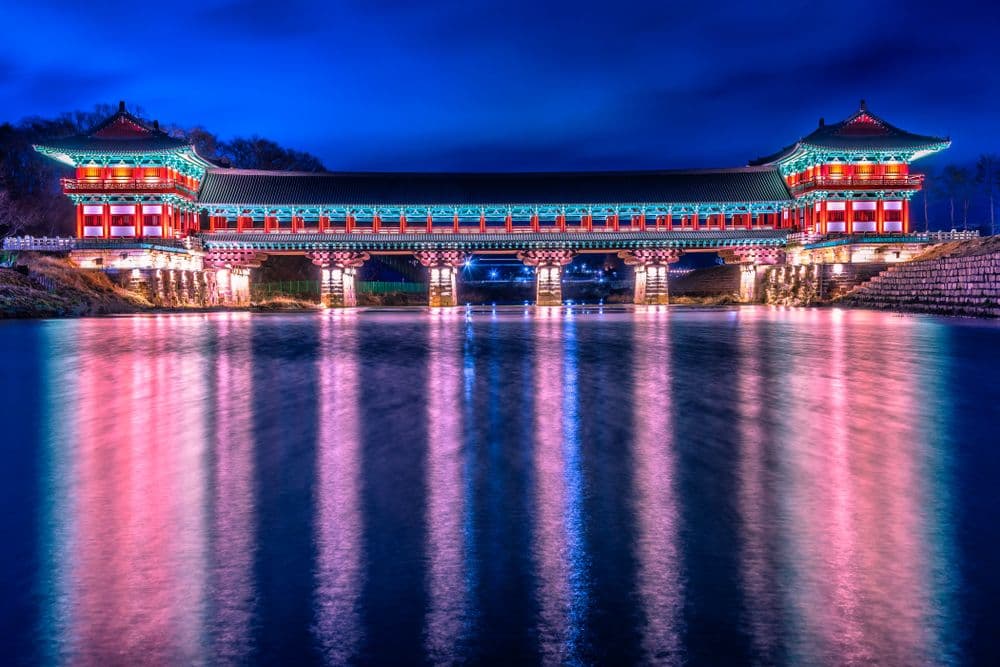
Located about two hours from Seoul by KTX and forty minutes from Busan, Gyeongju sits in the southeastern corner of the Korean peninsula in North Gyeongsang Province. To look at it from the window of an arriving train, it appears modest: a mid-sized city of around 250,000 people, quieter than you expected, without the skyline drama of Seoul or the coastal energy of Busan.
And then you drive five minutes from the station and find yourself standing in front of enormous grass-covered burial mounds rising from the earth in the middle of a residential neighborhood, the tombs of kings who ruled one of Asia's longest-lived dynasties, still present and largely intact after more than a thousand years.
Gyeongju was the capital of the Silla Kingdom for nearly a millennium — from around 57 BC until 935 AD, when the dynasty finally fell to the Goryeo Kingdom. At its height, Silla-era Gyeongju was one of the largest cities in the world. Arab traders wrote about it. Chinese diplomatic records described it as a city of gold. Buddhist temples, astronomical observatories, royal tombs, stone pagodas, and palace gardens were built here over centuries of sophisticated civilization, and an astonishing amount of it has survived.
The UNESCO World Heritage Committee, which inscribed the Gyeongju Historic Areas on its World Heritage List in 2000, called the city "an outstanding example of the cultural achievements of the Silla Kingdom." Historians sometimes compare it to Rome or Kyoto — cities where the past is not behind glass in a museum but present in the landscape itself, embedded in the ground you walk on.
Most tourists skip it entirely.
This guide exists to make the case that they shouldn't.
ㅤㅤㅤㅤㅤㅤ
Understanding What You're Looking At: The Silla Kingdom
Before visiting Gyeongju, it helps to understand something about the civilization that built it — because the scale and sophistication of what survives becomes significantly more affecting when you know the context.
The Silla Kingdom was one of three kingdoms that competed for dominance over the Korean peninsula from roughly the first century BC onward. In 668 AD, Silla unified the peninsula by defeating the rival Goguryeo and Baekje kingdoms — an achievement that established the foundation for a distinct Korean cultural identity that persists in important ways to the present day.
What made Silla distinctive was its extraordinary synthesis of indigenous Korean culture with influences from China, India, and Central Asia. Buddhism arrived in Silla in the 5th century AD and became the kingdom's defining spiritual and artistic framework: the great temples, stone carvings, and gilt bronze statues that characterize Silla art are among the finest surviving examples of East Asian Buddhist craftsmanship anywhere in the world.
Silla was also, for its time, an unusually sophisticated state in terms of social organization, astronomy, architecture, and metallurgy. The treasures recovered from Gyeongju's royal tombs — gold crowns of astonishing intricacy, glass vessels that trace trade routes reaching all the way to the Roman Empire, jade ornaments, lacquered wood — paint a picture of a civilization operating at the highest level of its era.
The city that was home to this kingdom lasted from roughly the 1st century BC to the 10th century AD: nearly a thousand years as a continuous capital. Rome, for comparison, was the capital of the Roman Empire for roughly five centuries. Gyeongju's run was nearly twice that.
Understanding this — that you are visiting what was, for much of human history, one of the world's great cities — reframes the experience entirely.
ㅤㅤㅤㅤㅤㅤ
The Key Sites: What to See and Why It Matters
Daereungwon Tomb Complex
The most immediately striking thing about Gyeongju — the thing that stops first-time visitors mid-sentence — is the burial mounds. Scattered across the city and its outskirts, these enormous grass-covered tumuli rise from the earth like gentle green hills, the tombs of Silla royalty and aristocracy built over centuries.
The Daereungwon complex in the heart of the city is the largest and most accessible concentration of these mounds. The park contains twenty-three tombs, the largest of which rise to over twenty meters in height and stretch across diameters of up to one hundred and fifty meters. Walking among them in the late afternoon light — the mounds casting long shadows across the surrounding streets, the modern city visible just beyond their perimeter — is an experience with no real equivalent in the rest of Korea.
Cheonmachong (Heavenly Horse Tomb), one of the mounds within Daereungwon, was excavated in 1973 and is now open for visitors to enter and see an interior replica of the burial chamber. The original artifacts recovered from Cheonmachong — including a spectacular gold crown, gold belt ornaments, and the famous painting of a flying horse on birch bark that gave the tomb its name — are displayed at the nearby Gyeongju National Museum. The crown alone, with its upswept gold branches and hanging jade ornaments, is one of the most extraordinary surviving objects from the ancient world.
Daereungwon is also, frankly, one of the most pleasant parks in Korea simply as a space. The grounds are carefully maintained, the paths are shaded, and the scale of the mounds creates a natural quiet that settles over the space regardless of how many visitors are present.
Bulguksa Temple and Seokguram Grotto
If the burial mounds represent Gyeongju's royal dimension, Bulguksa and Seokguram represent its spiritual one — and together they constitute what many art historians consider the greatest surviving achievement of Korean Buddhist architecture and sculpture.
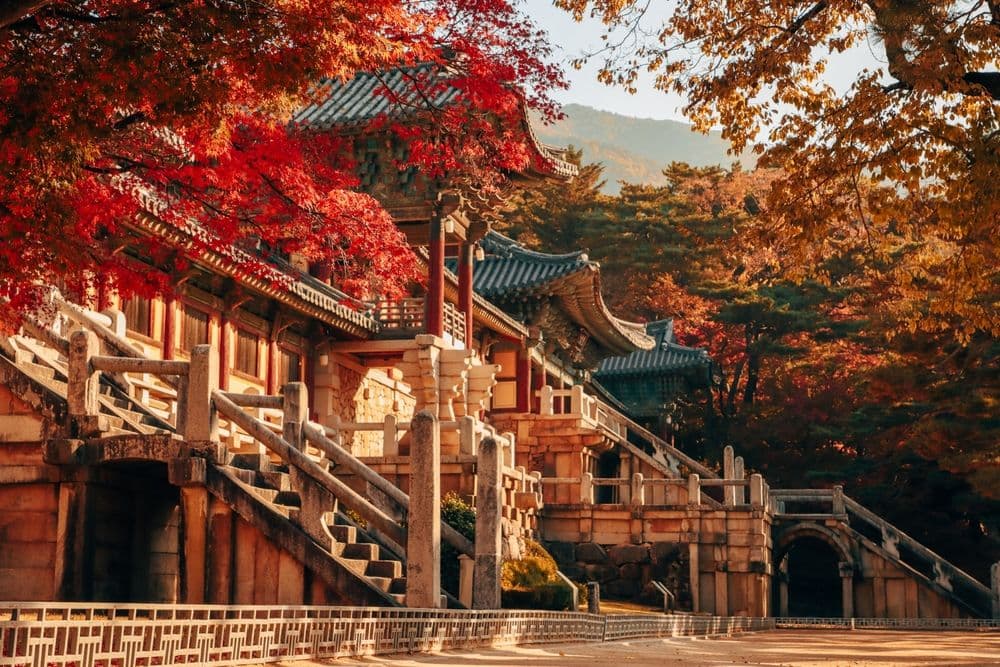
Bulguksa, located about sixteen kilometers from central Gyeongju on the slopes of Mount Tohamsan, was originally constructed in the 8th century during the reign of King Gyeongdeok. The temple complex that visitors see today is a restoration — the original was largely destroyed by Japanese forces during the Imjin War in the late 16th century — but it was rebuilt according to historical records and retains the spatial logic and architectural grammar of the original.
What makes Bulguksa extraordinary is the relationship between its stone platforms and staircases — Cheongungyo (Blue Cloud Bridge) and Baegungyo (White Cloud Bridge) are among the most photographed architectural elements in Korea — and the wooden temple halls that sit above them. The complex is organized as a literal ascent from the earthly realm to the Buddhist paradise, and once you understand that the geography of the site encodes this theological meaning, the way the stairs and courtyards unfold becomes something more than architecture.
Seokguram Grotto, about four kilometers further up the mountain from Bulguksa, is arguably the site that justifies the entire journey to Gyeongju on its own. Constructed in the mid-8th century as an artificial cave of granite, Seokguram houses a seated stone Buddha of approximately 3.5 meters in height, positioned at the precise geometric center of a circular chamber so that the morning light, entering through the now-enclosed entrance, once fell directly on the Buddha's forehead at sunrise.
The Buddha figure itself is considered by most scholars to be the finest example of Buddhist sculpture in East Asia. The technical mastery required to carve granite with this level of detail and expression — without the corrective possibilities available in bronze casting or clay modeling — is difficult to fully appreciate from photographs. Standing in front of it, even behind the glass barrier installed to protect the figure from humidity, the scale and serenity of the work lands in a way that no image can prepare you for.
Both Bulguksa and Seokguram were inscribed on the UNESCO World Heritage List in 1995.
ㅤㅤㅤㅤㅤㅤ
Cheomseongdae Observatory
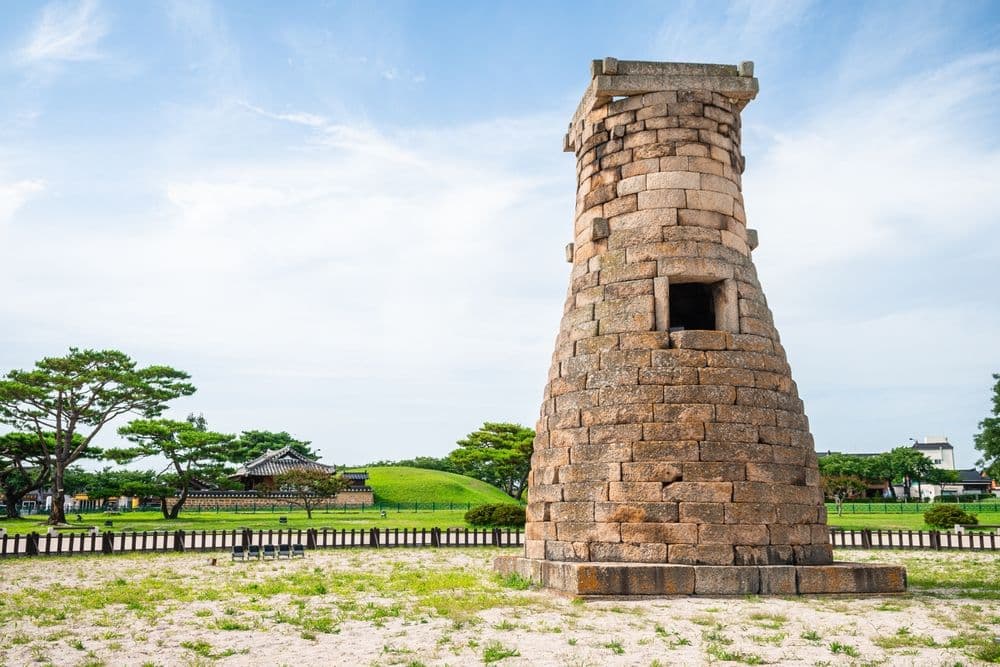
Standing alone in a field near the center of Gyeongju, Cheomseongdae is one of the most quietly powerful objects in Korean history. Built in the 7th century AD during the reign of Queen Seondeok — one of the few female rulers of the ancient world — it is widely considered the oldest surviving astronomical observatory in East Asia, and possibly in all of Asia.
The structure is a cylindrical tower of 362 carefully fitted granite blocks, approximately 9.4 meters high. It is neither large nor visually dramatic in isolation. What makes it affecting is context: this object was here, being used to observe the sky and track agricultural and ceremonial cycles, over thirteen hundred years ago. The kingdom that built it would continue for another three centuries. Most of the world's great ancient structures are ruins. Cheomseongdae is intact.
Visiting Cheomseongdae at sunset, when the low light catches the curve of the granite and the surrounding fields empty of the afternoon's tourist traffic, is one of the more meditative experiences Gyeongju offers. It does not demand anything from you. It simply exists, as it has for over a thousand years, doing nothing but enduring.
Gyeongju National Museum
No visit to Gyeongju is complete without spending time at the National Museum, which houses one of the most important collections of ancient Korean artifacts in the world. The treasures recovered from the city's tombs and temple sites — gold crowns, gilt bronze Buddhist statues, pottery, jewelry, lacquerware — are presented here with enough interpretive depth to transform what might otherwise feel like a collection of old objects into a coherent portrait of a civilization.
The Emille Bell (성덕대왕신종), cast in 771 AD and displayed in a dedicated pavilion in the museum grounds, is one of the largest and most acoustically sophisticated bronze bells ever made. Its casting involved a technique so precise that the bell's tone — a deep, resonant sound that carries for several kilometers — has been studied by modern acoustic engineers who marvel at how its 8th-century makers achieved it. The bell is not rung regularly, but recordings of its sound are played at the museum, and they are worth stopping to hear.
Anapji Pond
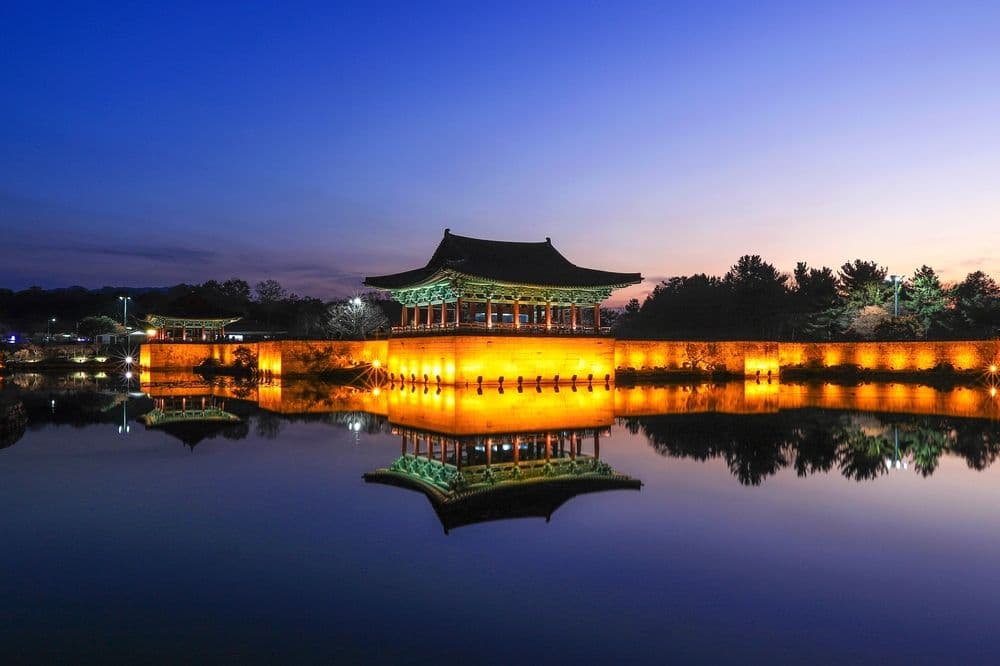
Anapji Pond — formally known now as Donggung and Wolji — was the artificial garden pond of a Silla royal palace complex, constructed in 674 AD. The pond and its surrounding pavilion structures were abandoned following the fall of the Silla Kingdom and lay dormant, gradually silting up, for over a thousand years.
Excavation in the 1970s recovered over thirty thousand artifacts from the pond floor — objects that had been thrown or fallen into the water over the centuries of the palace's use and preserved in the silt. The find was extraordinary: pottery, roof tiles, games, tools, Buddhist figures, and items of everyday palace life that gave archaeologists an unprecedented window into how Silla royalty lived.
The reconstructed pavilions that now ring the pond are at their most beautiful after dark, when they are illuminated and their reflections extend across the still water. Evening is by far the best time to visit. The combination of ancient history and the quiet drama of the illuminated reflection makes it one of the most atmospheric spots in all of Gyeongju — and, for many visitors, the image they carry away most vividly.
ㅤㅤㅤㅤㅤㅤ
Hwangniidan-gil: Where Ancient Gyeongju Meets Contemporary Korea
Gyeongju is not only a city of ancient monuments. In recent years, the Hwangniidan-gil district — a neighborhood of narrow streets running along the western edge of Daereungwon — has developed into one of the most charming and thoughtfully curated small urban areas in Korea.
The neighborhood's character comes from the contrast between its low-rise traditional-style architecture and the independent cafés, restaurants, bakeries, and small shops that have filled the old buildings with contemporary life. Unlike the more heavily commercialized hanok districts in Seoul, Hwangniidan-gil has maintained a relatively unhurried atmosphere. It is genuinely local in character — the kind of place where the café across from the ancient tomb has regulars who come every morning and know the owner by name.
Specific highlights include specialty coffee roasters serving single-origin Korean and international beans, restaurants doing contemporary takes on traditional Gyeongju ingredients (the city is famous for its Gyeongju bread, and ssambap rice sets), and small design stores selling ceramics and textiles that draw on Silla motifs for their aesthetic inspiration.
Spending a morning or afternoon in Hwangniidan-gil — particularly on a weekday when the crowds are thinner — offers a version of Gyeongju that is present tense as well as historical, and that gives the city a warmth and texture that pure monument-touring can sometimes miss.
ㅤㅤㅤㅤㅤㅤ
Practical Tips for Visiting Gyeongju
Getting there.
The fastest way from Seoul is the KTX to Singyeongju Station, approximately 2 hours from Seoul Station. From Busan, the KTX takes about 25 minutes. Once in Gyeongju, the main sites are spread across a relatively large area — renting a bicycle is one of the most enjoyable ways to navigate between them, particularly for the cluster of sites in and around central Gyeongju. Taxis are inexpensive and widely available for longer distances or the mountain road up to Bulguksa and Seokguram.
How long to spend.
Two full days is the minimum to cover the major sites without rushing. Three days allows you to spend time at each site at the right hour — Cheomseongdae at sunset, Anapji Pond after dark, Seokguram in the early morning — and still have time for Hwangniidan-gil, the National Museum, and the outlying sites. Gyeongju rewards slow travel more than almost anywhere else in Korea.
When to go.
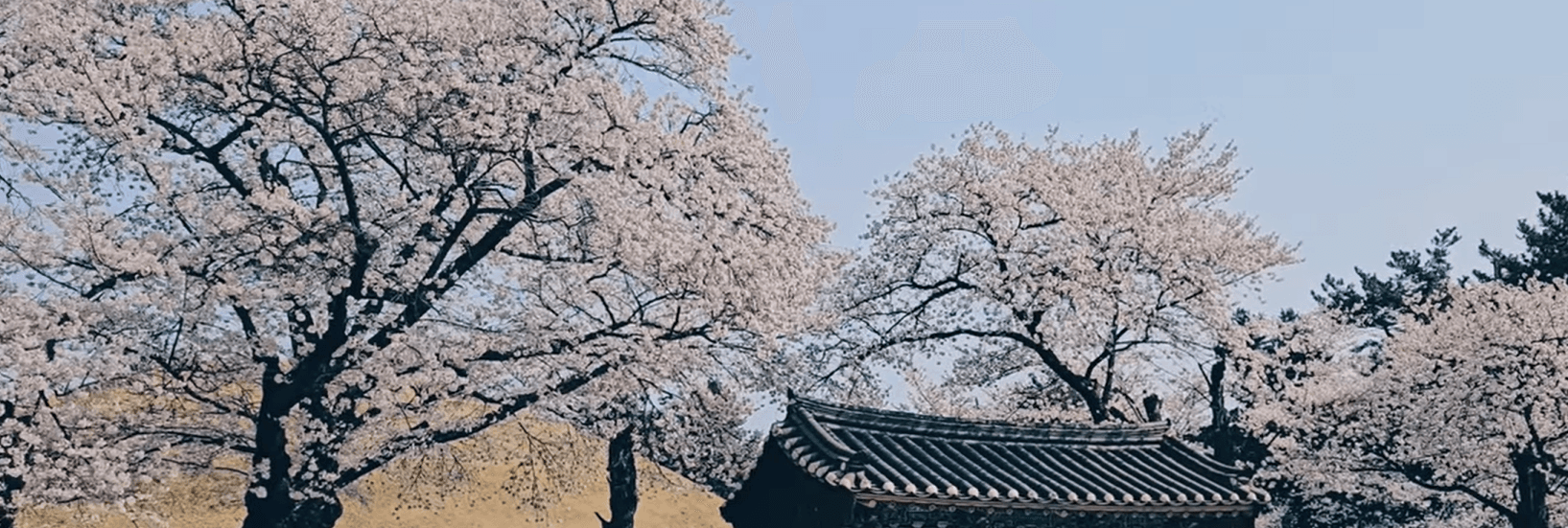
Spring (late March to early May) brings cherry blossoms that transform the area around Daereungwon and Bulguksa into one of the most beautiful landscapes in Korea. Autumn (October to early November) offers foliage and cooler temperatures that suit the long walks between sites. Summer is hot and humid but manageable if you start early and rest in the afternoon. Winter is quiet and atmospheric, particularly around the tombs and temple sites, but some sites reduce their hours.
What to eat.
Gyeongju has a distinctive food culture worth exploring beyond the famous Gyeongju bread (a dense, sweet pastry filled with red bean paste, sold everywhere and genuinely delicious). Look for ssambap (a rice set served with multiple small vegetable and fermented dishes), hanjeongsik (traditional full-course Korean table dining), and the city's local rice wine. The restaurants around Hwangniidan-gil offer the most interesting contemporary takes on these traditional ingredients.
Where to stay.
The area around Hwangniidan-gil and Daereungwon offers several well-regarded hanok guesthouses (한옥 게스트하우스) that allow you to sleep in a traditional Korean building in the immediate vicinity of the royal tombs — an experience that is, for many visitors, the accommodation memory of their entire Korea trip.
ㅤㅤㅤㅤㅤㅤ
Why Gyeongju Belongs on Your Korea Itinerary
The most common reason people give for not visiting Gyeongju is that they didn't know enough about it. Seoul is so overwhelming in its scope and energy that it tends to absorb the entire available mental bandwidth of a first Korea trip, and Busan's reputation as a beach and food destination makes it an obvious second stop. Gyeongju, quieter and less telegenic in its appeal, tends to be left for a hypothetical "next time."
The irony is that Gyeongju offers something neither Seoul nor Busan can: a direct encounter with the deep historical roots of Korean civilization, presented not as reconstructed heritage but as a living landscape that has changed remarkably little in its essential character since the Silla kings walked it.
There are places in the world where history is something you go to museums to learn about. And there are places where history is what the ground is made of. Gyeongju is the second kind of place.
The burial mounds are not in a heritage park outside the city. They are in the middle of neighborhoods, visible from coffee shop windows, casting shadows across school commutes. The observatory that a queen ordered built to read the stars is standing in a field you can walk to after lunch. The temple on the mountainside has been there, in various forms of reconstruction and repair, for over twelve centuries.
To visit Gyeongju is to spend time in a place that insists, quietly and without drama, that the past is not gone. It has simply been here all along, waiting for you to come and see it.
Most tourists skip it.
You don't have to.
ㅤㅤㅤㅤㅤㅤ
ㅤㅤㅤㅤㅤㅤ
#Gyeongju #KoreaTravel #VisitKorea #KoreanHistory #Bulguksa #SillaKingdom #KTravelGuide #HiddenKorea #AncientKorea #SeoulDayTrip